Creativity has always been about transformation.
A single idea can evolve into a story.
A story can become a visual.
A visual can turn into an immersive experience.
For years, creators had to manually translate ideas across these formats—moving step by step from imagination to execution. But artificial intelligence is reshaping that process in a profound way.
We’ve already seen how AI can bridge creative gaps, enabling transformations between different mediums. These innovations demonstrated that machines can understand patterns across formats and reinterpret them in new ways.
Now, that evolution is reaching a new stage.
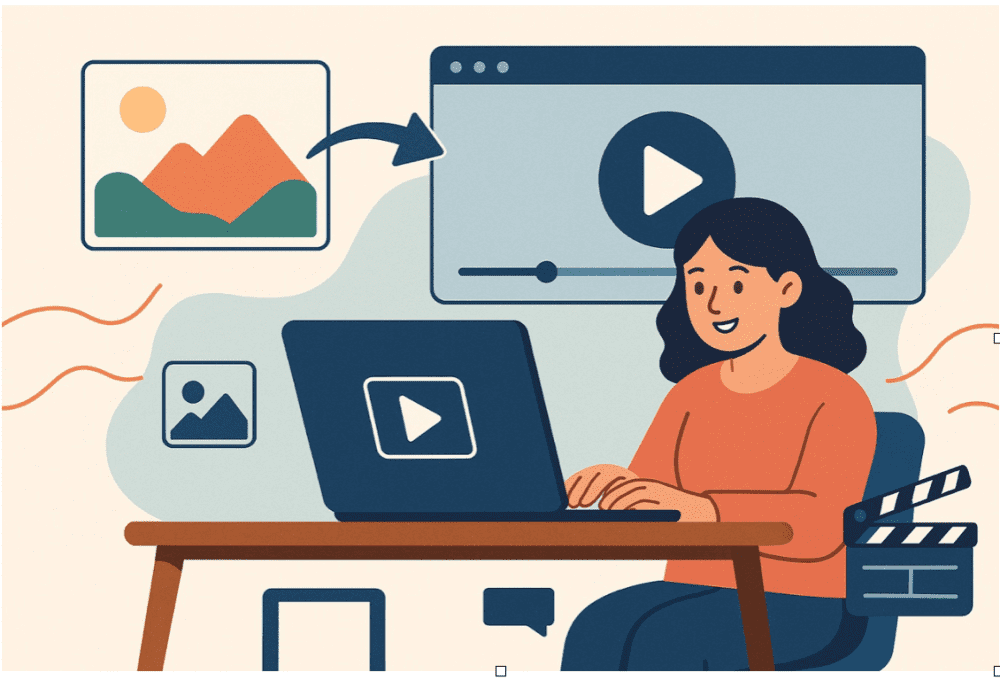
Instead of converting content from one form to another, AI is beginning to generate fully realized video content directly from ideas.
The Shift From Conversion to Creation
Earlier AI tools focused primarily on transformation:
- Text into images
- Images into sound
- Audio into enhanced versions
While impressive, these systems still relied on existing input material.
AI video generation changes the starting point.
Now, creators can begin with:
- A short description
- A conceptual idea
- A visual mood
And the system generates a complete video sequence.
This shift—from transformation to creation—marks a major milestone in digital content production.
A Unified Workflow with Yolly AI
As AI capabilities expand, one of the biggest challenges becomes managing multiple tools across different stages of creation.
This is where Yolly AI provides a meaningful advantage.
Rather than focusing on a single function, it acts as a centralized creative environment, allowing users to streamline their workflow from idea to output.
Why This Matters
- Reduces complexity in the creative process
- Keeps everything within a single ecosystem
- Improves efficiency and speed
Instead of jumping between platforms, creators can maintain momentum and stay focused on developing their ideas.
Turning Ideas Into Video with Seedance 2.0
Within this environment, one of the most powerful tools available is Seedance 2.0.
Unlike traditional editing software, Seedance 2.0 is designed for generation rather than manual construction.
What It Enables
Creators can:
- Describe a scene in natural language
- Provide references or visual direction
- Define mood and style
From there, the system generates a cohesive video that includes motion, composition, and transitions.
Key Capabilities
- Text-to-video generation
- Image-to-video animation
- Automated scene structuring
- Rapid iteration for multiple variations
This approach significantly reduces the need for technical expertise while expanding creative possibilities.
Rethinking the Creative Process
To better understand the impact, it helps to compare traditional and AI-driven workflows.
Traditional Workflow
- Plan the concept
- Capture or source footage
- Edit manually
- Add effects and transitions
- Export final content
AI-Driven Workflow
- Imagine
- Describe
- Generate
- Refine
This streamlined process shifts the focus from execution to ideation.
A Practical Example
Consider a simple idea:
“A futuristic city at sunset with glowing lights and moving traffic”
Traditionally, this would require:
- Visual assets
- Editing software
- Time and expertise
With AI video tools:
- You input the concept
- The system generates the scene
- You refine style and details
Within minutes, the idea becomes a usable video.
Why This Matters for Creators
Accessibility
AI removes many technical barriers, allowing more people to create high-quality content.
Speed
Production timelines shrink dramatically, enabling faster content cycles.
Creative Freedom
Because iteration is easy, creators can experiment with multiple ideas without significant cost or effort.
Scalability
This approach makes it possible to produce content at scale, especially for marketing, education, and social media.
Current Limitations
Despite its advantages, AI video generation is still evolving.
Some challenges include:
- Output quality depends on input clarity
- Limited fine-grained control compared to manual editing
- Occasional inconsistencies in generated visuals
However, rapid advancements in AI are addressing these issues.
The Bigger Shift
What makes this transformation significant is not just the technology itself, but the change in mindset it introduces.
We are moving from:
- Building content → to generating content
- Managing tools → to guiding creative direction
- Technical execution → to conceptual thinking
This represents a fundamental shift in how creativity is approached.
Final Thoughts
AI is no longer just a supporting tool—it is becoming a core part of the creative process.
Platforms like Yolly AI provide the environment, while tools like Seedance 2.0 provide the capability to turn ideas into motion.
Together, they enable a new kind of workflow that is:
- Faster
- Simpler
- More focused on imagination
And in this new era, the most valuable skill is no longer technical precision.
It’s the ability to think creatively and translate ideas into something meaningful.