Artificial intelligence tools are evolving rapidly. In recent years, platforms designed for learning automation and intelligent workflows have gained enormous popularity.
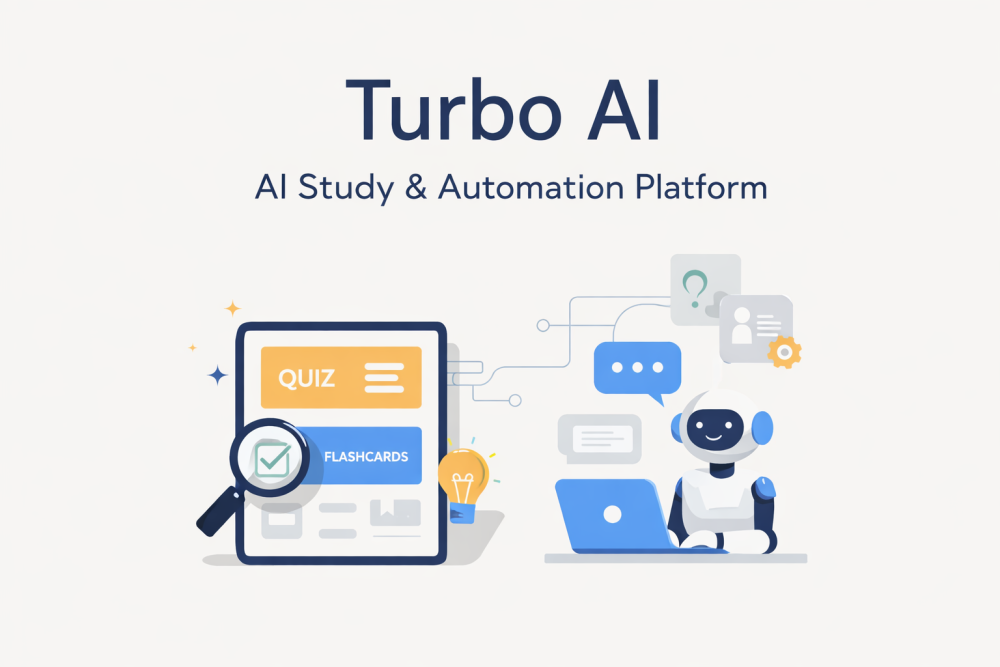
One of the emerging platforms in this space is Turbo AI, a system designed to assist both students and businesses with advanced automation.
Unlike traditional AI assistants that only generate text, modern platforms now focus on active interaction, automated learning systems, and intelligent decision support.
In this guide, you will learn:
- What this platform is and how it works
- The main features available in 2026
- How it compares with other AI learning tools
- Practical ways students and businesses can use it
Related blogs:
What Is Turbo AI?
Turbo AI is an artificial intelligence platform designed to analyze information, generate learning materials, and automate workflows.
Instead of simply summarizing content, the system focuses on interactive knowledge processing.
Typically, the technology is used in two major areas:
1. AI Learning Platforms
Students use the system to:
- convert notes into flashcards
- generate quizzes automatically
- summarize long documents
- create practice exams
2. AI Automation Agents
Businesses use similar technology to:
- automate customer support
- analyze large datasets
- classify support tickets
- generate knowledge base summaries
Because of this dual functionality, the technology sits between education technology and enterprise automation platforms.
Why AI Learning Platforms Are Growing in 2026
The way people interact with technology has changed dramatically.
Previously, users relied on AI tools mainly for content generation. However, modern platforms now focus on assessment-based learning and intelligent automation.
Several trends explain this shift.
Active Recall Learning
Instead of reading summaries repeatedly, learners test themselves using quizzes and flashcards.
Spaced Repetition
Information is reviewed at optimal intervals to improve long-term memory retention.
Multi-Format Learning
Students today learn from many formats such as:
- lecture recordings
- PDFs
- YouTube videos
- presentations
AI systems now convert these formats into structured learning materials automatically.
AI Flashcards and Smart Study Systems

One of the most valuable capabilities of modern study assistants is the ability to transform raw material into structured study tools.
For example, a student can upload lecture notes or a textbook chapter.
The system then generates:
- flashcards
- short summaries
- practice questions
- quick revision sheets
Because of this automation, learners can focus on understanding concepts rather than organizing study material.
Furthermore, flashcards based on spaced repetition significantly improve memory retention.
AI-Generated Practice Tests and Assessments
Traditional study tools mainly provide summaries. However, modern platforms go further by creating adaptive assessments.
These tools analyze a student’s progress and then generate personalized practice exams.
As a result, learners receive:
- instant feedback
- performance analysis
- recommendations for improvement
Consequently, studying becomes more interactive and efficient.
Multi-Format Content Conversion

Another powerful feature is content conversion.
Students no longer need to manually create notes from long videos or documents.
Instead, the AI can analyze multiple formats, including:
- YouTube lectures
- PDF textbooks
- recorded classes
- presentation slides
After processing the material, the system produces structured notes and learning modules.
Therefore, complex information becomes easier to understand and review.
AI Agents for Business Automation
In addition to education, similar technology is widely used in business automation systems.
AI agents can assist companies by managing routine operations.
Common use cases include:
Customer Support Automation
AI systems can analyze customer queries and generate suggested responses.
Ticket Classification
Incoming support requests are automatically categorized based on urgency and topic.
Knowledge Base Assistance
Large internal documentation can be summarized and organized for faster access.
Because of these capabilities, companies increasingly rely on AI-powered support agents to improve efficiency.
Comparison With Other AI Study Platforms
Many users compare this technology with other modern learning tools.
Below is a simplified comparison of popular platforms.
| Platform | Best For | Key Advantage |
|---|---|---|
| Turbo AI | Learning + automation | Multi-format content processing |
| Studley AI | Students | Fast flashcard generation |
| TurinQ | Exam preparation | Advanced practice testing |
| StudyCheetah | Quick summaries | Simple note summarization |
Overall, platforms that combine learning tools and workflow automation provide a broader range of functionality.
How Students Can Use AI Study Platforms
Students typically follow a simple workflow when using AI learning assistants.
Step 1: Upload Study Material
This can include lecture slides, documents, or recorded classes.
Step 2: Generate Learning Resources
The system creates flashcards, quizzes, and summarized notes.
Step 3: Practice Active Recall
Instead of rereading notes, learners test themselves regularly.
Step 4: Track Learning Progress
Performance analytics highlight weak areas that require more practice.
As a result, study sessions become more focused and effective.
Benefits and Limitations
Advantages
✔ Saves time preparing study materials
✔ Supports multiple content formats
✔ Provides instant feedback and testing
✔ Useful for both education and business tasks
Limitations
✖ Some advanced features may require paid plans
✖ AI summaries occasionally miss detailed context
✖ Automation tools require configuration
Nevertheless, the technology continues to improve rapidly.
The Future of AI Learning and Automation
The next generation of AI tools will likely include even more advanced capabilities.
Possible developments include:
- AI tutors that adapt to each student’s learning style
- automated study schedules
- voice-based AI learning assistants
- collaborative AI study groups
As artificial intelligence continues to evolve, platforms that combine learning systems with intelligent automation will likely dominate the productivity ecosystem.
Conclusion
AI learning platforms are transforming how people study and work. By combining content analysis, automated assessments, and workflow automation, tools like Turbo AI represent the next stage of digital productivity.
Students can prepare for exams more efficiently, while businesses can automate routine tasks and improve customer support operations.
Therefore, anyone interested in AI-powered productivity tools should keep an eye on this rapidly growing category.
Frequently Asked Questions
Is Turbo AI free?
Many platforms offer free plans with limited features, while advanced tools usually require a subscription.
Can AI study tools summarize PDFs?
Yes. Most systems can analyze PDF documents and convert them into notes, flashcards, and quizzes.
Are AI learning assistants good for exam preparation?
Yes. Techniques like active recall and spaced repetition make these tools highly effective for exam revision.
Can businesses use AI automation tools?
Yes. AI agents can automate customer support, document analysis, and workflow management.