In 2026, AI creativity is no longer just about typing better prompts. It’s about combining visuals intelligently. That’s where Whisk AI enters the scene.
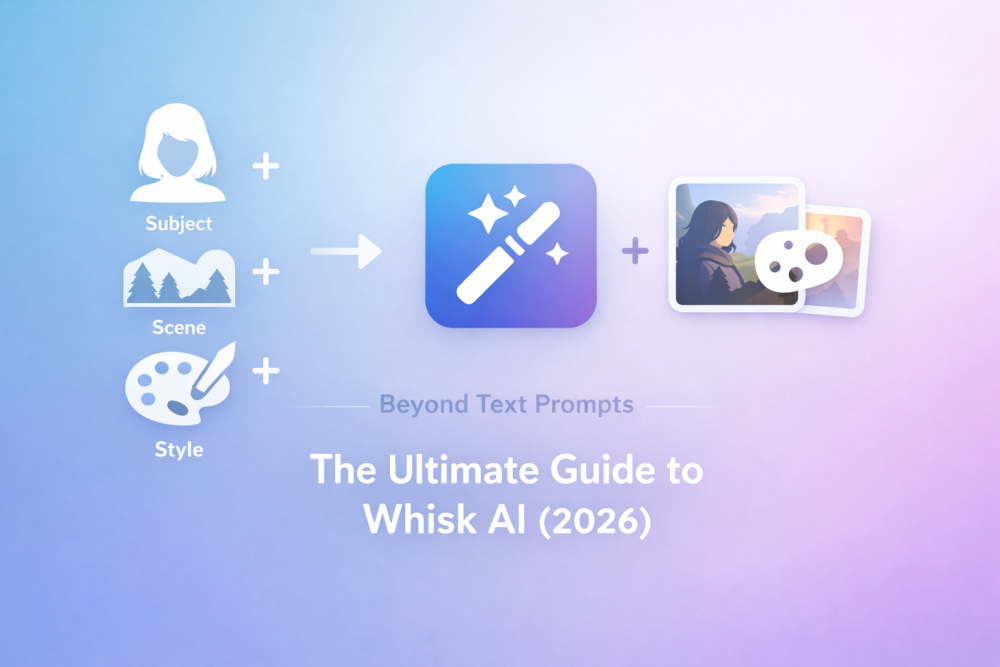
Developed as an experimental tool under Google Labs, Whisk AI allows users to remix images using a structured logic: Subject + Scene + Style.
Instead of describing everything in text, you show the AI what you want.
This guide explains how Whisk AI works, how it compares to competitors, and how to use it for advanced workflows like brand consistency and character design.
Related Blogs:
What is Whisk AI?
Whisk AI is an AI image remix tool that lets users combine multiple reference images into a new composition.
Unlike traditional text-to-image tools, Whisk works multimodally:
- Upload a Subject image (e.g., a character)
- Upload a Scene image (e.g., a forest or city)
- Upload a Style image (e.g., watercolor, cyberpunk)
- Generate a remixed result
It is powered by Google’s next-gen image models like Imagen 3 and integrated within the Gemini ecosystem under Gemini.
Why It Matters in 2026
Search engines now prioritize multimodal intent. Users don’t just want “AI image generator.” They want:
- AI that keeps characters consistent
- AI that combines references
- AI that remixes visuals intelligently
Whisk AI directly addresses this gap.
How Whisk Works: The Subject–Scene–Style Trinity
Whisk operates like a creative recipe:
Final Image = Subject + Scene + Style
Let’s break this down.
1. Subject
The main character or object you want to preserve.
2. Scene
The environment or background context.
3. Style
The artistic treatment (oil painting, anime, 3D render, etc.).
Step-by-Step: Your First AI Remix
Here’s a simple workflow to get started:
- Open Whisk in Google Labs.
- Upload your Subject image.
- Add a Scene reference.
- Add a Style reference.
- Generate and refine.
Recipe Used:
- Subject: Fantasy character
- Scene: Mystical forest
- Style: Watercolor
Alt-text example for SEO:
“Fantasy character remixed with watercolor style in mystical forest using Whisk AI”
This type of descriptive alt text helps with Generative Engine Optimization (GEO) and improves AI Overview citations.
Whisk AI vs Midjourney & DALL·E 3
Whisk AI competes indirectly with tools like:
- Midjourney
- DALL·E 3
Here’s how they differ:
| Feature | Whisk AI | Midjourney | DALL·E 3 |
|---|---|---|---|
| Image-based prompting | ✅ Native | ⚠️ Limited (--sref) | ⚠️ Basic |
| Character consistency | Strong | Moderate | Moderate |
| Google ecosystem integration | ✅ Yes | ❌ No | ❌ No |
| Ease for beginners | High | Medium | High |
Where Whisk Wins
Whisk is better when you want:
- Consistent game characters
- Brand asset variations
- Style transfer using visual references
- Combining three images into one AI output
Midjourney still excels at purely aesthetic outputs, but Whisk is more structured.
Advanced Tips: Character Consistency Workflow
Most tutorials stop at “upload three images.” Let’s go deeper.
1. Lock the Subject First
Generate multiple versions using only:
- Subject + Style
Then introduce the Scene later.
2. Use Style Sparingly
Too strong a style reference can distort the subject. Use clean textures or subtle paintings for better control.
3. Batch Remix for Brand Kits
You can create:
- Website hero images
- Social media thumbnails
- Blog feature visuals
All while maintaining the same character and style.
This is especially useful if you’re building tech blogs or AI explainers (which fits your SEO-focused content strategy).
The Bigger Picture: From Whisk to AI Video
Whisk is not an isolated tool. It signals a direction.
Google is moving toward fully multimodal creation—combining images, text, and eventually video.
Tools like Veo represent the next stage:
Subject + Motion + Style
Whisk may become the foundation for structured video remixing in the near future.
2026 SEO Strategy: How to Rank for Whisk AI
If you are writing about Whisk AI:
1. Use Multimodal Content
Include original remix examples.
2. Use Structured Headings
Mirror the “Recipe” logic in your H2/H3 structure.
3. Implement Schema
Use:
SoftwareApplicationschemaHowToschema
4. Target Long-Tail Queries
Optimize for:
- “How to use Whisk AI for character consistency.”
- “Whisk AI vs Midjourney style reference.”
- “Combine three images into one A.I”
Final Thoughts
Whisk AI is not just another AI image generator.
It represents a shift from describing visuals to composing visuals.
In a world where search engines prioritize multimodal understanding, tools like Whisk AI align perfectly with how users now think and create.
If you’re a designer, developer, or AI-focused content creator, this is one tool worth experimenting with in 2026.